
Serum Electrolytes report format
A serum electrolytes report format with sodium, potassium and chloride and their reference ranges.
Report layout used at Sobhana Diagnostics, signed by Dr. V. Aruna Sree, MBBS, DCP · Consultant Pathologist
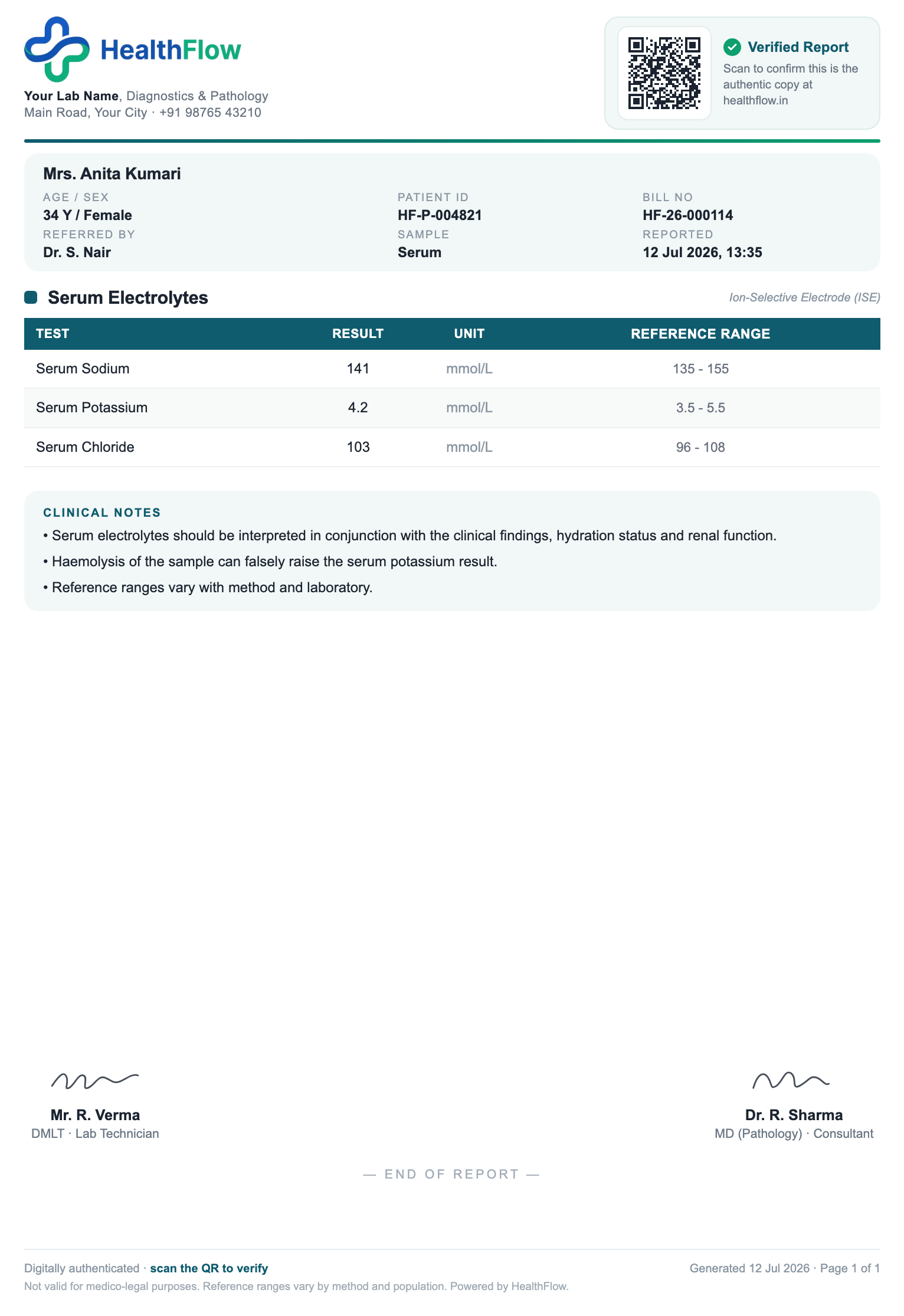
Sample format. "Your Lab Name" is a placeholder. On HealthFlow every report carries your lab's own logo, letterhead and colours, and the QR opens the authentic signed copy through a logged verification gateway.
What this Serum Electrolytes format includes
Every line carries the result, its unit and the reference range, with out-of-range values flagged. The values below are sample values, shown so you can see the layout.
| Test | Result | Unit | Reference range |
|---|---|---|---|
| Serum Sodium | 141 | mmol/L | 135 - 155 |
| Serum Potassium | 4.2 | mmol/L | 3.5 - 5.5 |
| Serum Chloride | 103 | mmol/L | 96 - 108 |
How a Serum Electrolytes report is read
- Serum electrolytes should be interpreted in conjunction with the clinical findings, hydration status and renal function.
- Haemolysis of the sample can falsely raise the serum potassium result.
- Reference ranges vary with method and laboratory.
What commonly goes wrong with a Serum Electrolytes
The practical errors that actually cause repeat samples and misread results, mostly at collection and at the point the result is read.
- Potassium is a handling test as much as a patient test. Haemolysis, a long or tight tourniquet, a very fine needle, delay in separating serum, and refrigerating whole blood before spinning all raise it falsely.
- Never draw from the arm carrying an IV line. A sample taken above a running drip reports the fluid rather than the patient and usually shows an implausible sodium or potassium.
- A very high triglyceride or total protein level gives a falsely low sodium on indirect ISE methods. A grossly lipaemic sample with an unexplained low sodium should be flagged, not reported plainly.
- A markedly high potassium together with a markedly low calcium in the same sample is EDTA contamination until proved otherwise, and calls for a fresh draw.
Want this Serum Electrolytes format for your own lab?
Looking for prices instead? See the cost of this test in India.
What does a Serum Electrolytes report format include?
A serum electrolytes report format with sodium, potassium and chloride and their reference ranges. Each line shows the result, its unit and the reference range, with out-of-range values flagged, followed by clinical notes on how the test is interpreted.
Can this Serum Electrolytes format carry my lab's brand?
Yes. On HealthFlow the report is white-label: your lab's logo, letterhead, address and colours replace the "Your Lab Name" placeholder, and it can be printed or delivered on WhatsApp from your own number.