
Biomedical waste segregation
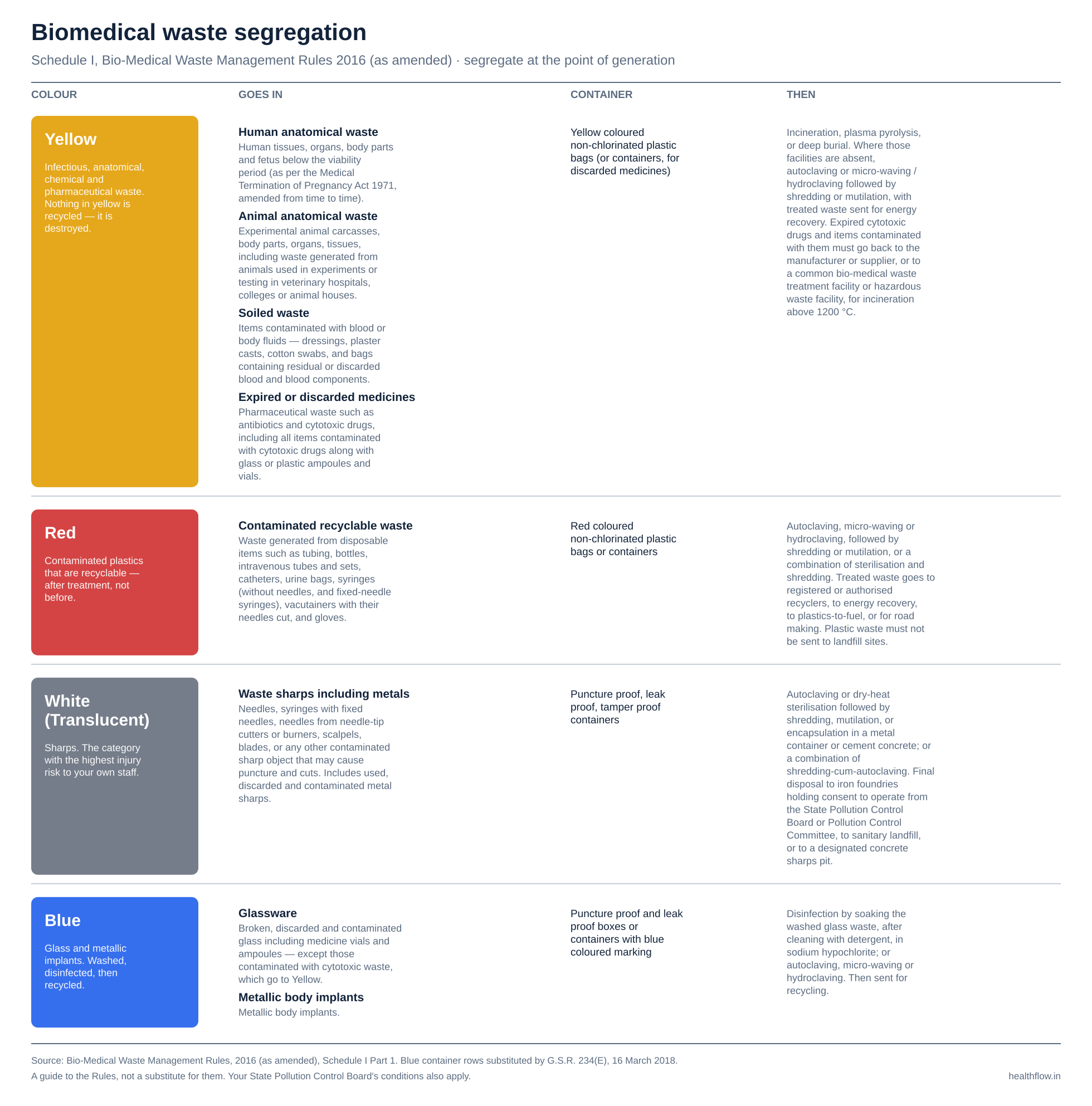
Four colours, set by Schedule I of the Bio-Medical Waste Management Rules, 2016. Segregation happens at the point of generation — at the bench, not at the collection point and not later. Below is what goes in each, the container the Rules specify, and where it has to end up.
Yellow
Infectious, anatomical, chemical and pharmaceutical waste. Nothing in yellow is recycled — it is destroyed.
What goes in
- Human anatomical waste
- Human tissues, organs, body parts and fetus below the viability period (as per the Medical Termination of Pregnancy Act 1971, amended from time to time).
- Animal anatomical waste
- Experimental animal carcasses, body parts, organs, tissues, including waste generated from animals used in experiments or testing in veterinary hospitals, colleges or animal houses.
- Soiled waste
- Items contaminated with blood or body fluids — dressings, plaster casts, cotton swabs, and bags containing residual or discarded blood and blood components.
- Expired or discarded medicines
- Pharmaceutical waste such as antibiotics and cytotoxic drugs, including all items contaminated with cytotoxic drugs along with glass or plastic ampoules and vials.
Container the Rules specify
Yellow coloured non-chlorinated plastic bags (or containers, for discarded medicines)
Treatment and disposal
Incineration, plasma pyrolysis, or deep burial. Where those facilities are absent, autoclaving or micro-waving / hydroclaving followed by shredding or mutilation, with treated waste sent for energy recovery. Expired cytotoxic drugs and items contaminated with them must go back to the manufacturer or supplier, or to a common bio-medical waste treatment facility or hazardous waste facility, for incineration above 1200 °C.
For a diagnostic lab: The category a diagnostic lab fills fastest. Soiled cotton, used dressings and blood-contaminated consumables all land here.
Red
Contaminated plastics that are recyclable — after treatment, not before.
What goes in
- Contaminated recyclable waste
- Waste generated from disposable items such as tubing, bottles, intravenous tubes and sets, catheters, urine bags, syringes (without needles, and fixed-needle syringes), vacutainers with their needles cut, and gloves.
Container the Rules specify
Red coloured non-chlorinated plastic bags or containers
Treatment and disposal
Autoclaving, micro-waving or hydroclaving, followed by shredding or mutilation, or a combination of sterilisation and shredding. Treated waste goes to registered or authorised recyclers, to energy recovery, to plastics-to-fuel, or for road making. Plastic waste must not be sent to landfill sites.
For a diagnostic lab: Note the detail that catches labs out: the syringe goes in red only once the needle is off. The needle itself is White.
White (Translucent)
Sharps. The category with the highest injury risk to your own staff.
What goes in
- Waste sharps including metals
- Needles, syringes with fixed needles, needles from needle-tip cutters or burners, scalpels, blades, or any other contaminated sharp object that may cause puncture and cuts. Includes used, discarded and contaminated metal sharps.
Container the Rules specify
Puncture proof, leak proof, tamper proof containers
Treatment and disposal
Autoclaving or dry-heat sterilisation followed by shredding, mutilation, or encapsulation in a metal container or cement concrete; or a combination of shredding-cum-autoclaving. Final disposal to iron foundries holding consent to operate from the State Pollution Control Board or Pollution Control Committee, to sanitary landfill, or to a designated concrete sharps pit.
For a diagnostic lab: A phlebotomy room generates this continuously. The container must be puncture, leak and tamper proof — an ordinary bin is not compliant.
Blue
Glass and metallic implants. Washed, disinfected, then recycled.
What goes in
- Glassware
- Broken, discarded and contaminated glass including medicine vials and ampoules — except those contaminated with cytotoxic waste, which go to Yellow.
- Metallic body implants
- Metallic body implants.
Container the Rules specify
Puncture proof and leak proof boxes or containers with blue coloured marking
Treatment and disposal
Disinfection by soaking the washed glass waste, after cleaning with detergent, in sodium hypochlorite; or autoclaving, micro-waving or hydroclaving. Then sent for recycling.
For a diagnostic lab: Every biochemistry and serology bench produces blue waste daily in vials and ampoules. The cytotoxic exception matters — those are Yellow, not Blue.
What the occupier has to do
- Segregate at the point of generation, into the colour specified in Schedule I — not at the collection point, and not later.
- Provide a safe, ventilated and secured location within the premises for storing segregated waste in the specified coloured bags or containers.
- Use non-chlorinated plastic bags meeting BIS standards; until those are published, the prevailing Plastic Waste Management Rules apply.
- Maintain a record of waste generated, and of recyclable waste that is auctioned or sold.
- Hand over to an authorised common bio-medical waste treatment facility, and keep the consignment record.
On deep burial: Disposal by deep burial is permitted only in rural or remote areas with no access to a common bio-medical waste treatment facility. It requires prior approval from the prescribed authority, must meet the standards in Schedule II, and the facility must be located per Central Pollution Control Board guidelines.